A Season of Fruitlands

Fruitlands Museum, CC HeritageArts&Letters

Very often, an intentional community that no longer exists is referred to as a failed utopia. You usually see those two words together: failed and utopia. Brook Farm is sometimes described as having failed because it disbanded after the Phalanstery burned down; but had you visited one or two years after its founding, you would have encountered a thriving, successful venture.

Labeling a community as having failed just because it’s no longer around assumes permanence was its primary goal. A better gauge, I think, is whether it fulfilled its objectives during its lifetime, no matter how fleeting its span might have been.

And yet even by that metric, it’s hard to argue that Fruitlands was anything but a disaster.

Like Brook Farm, Fruitlands was founded by members of the transcendentalist movement. In May 1843, Charles Lane, an eccentric Englishman who found America more fertile for his utopian dreams, bought a 90-acre farm about 16 miles west of Concord, Massachusetts. There, he and his bestie Amos Bronson Alcott founded the Fruitlands commune. Several other members, as well as Alcott’s family — which included a young Louisa May Alcott — joined them.

Lane and Alcott were much more rigid than the Ripleys at Brook Farm. The Fruitlands ethos preached strict self-sufficiency, with Lane writing that the “Exchange of Commodities, useful & useless” was bad for human nature, which complicated their acquisition of those things they couldn’t produce themselves (Lane even went so far as to not recognize the farm as being his property). The Fruitlanders were abolitionists, so no cotton was allowed because it was picked by slaves; but neither was wool, as they were vegans. They were also raw foodies, so most cooking was out, and they shunned root foods as being unhealthy. Even candles were forbidden as the wax appropriated the labor of bees, so everyone went to bed as soon as it was dark.

It’s not an easy thing to survive a New England winter with only linen clothes and no potatoes, onions, or beets in the cellar. While Lane and Alcott did relent on some things — they bought an ox to plow and a cow for milk — by December the Fruitlanders were starving and deserted the project. Amos sank into a deep depression. His wife Abby took the reins and brought the family to a friend’s house where they could again wear warm clothes and eat a decent meal, and gradually she nursed her husband back to health. If there’s a moral to be learned from the Fruitlands experiment, it’s a feminist one.
A Season of Whispers

Louis May Alcott wrote a barely fictionalized satire of the experience called “Transcendental Wild Oats,” which is available in her collection Silver Pitchers. By all means, read it — if not for its depiction of her father’s folly, then for its sympathetic portrait of her long-suffering mother.

Another interesting character at Fruitlands was Joseph Palmer, who prior to joining spent 15 months in prison after defending himself from an attack by hooligans trying to shave his beard. After Fruitlands, well, failed, Palmer bought the farm and lived there for 20 years, which suggests it wasn’t the land or climate so much as the ideology that ruined Lane and Alcott’s dream.

You can visit Fruitlands where, unlike Brook Farm, you’ll find some of the original buildings intact. Fruitlands also served as an inspiration for Bonaventure, the fictional transcendentalist farm that’s the setting for my novel, A Season of Whispers, which is out tomorrow.

A Season of Machimoodus State Park

My novel A Season of Whispers is available this Thursday, and all week I’m touring the places that influenced its setting.

Machimoodus State Park, located in East Haddam, Connecticut, is a 300-acre park full of crumbled stone walls, trap rock, and towering white pines located along the Salmon River.

It’s also the source — or, at least, is one of the sources — of the Moodus Noises.

Back during my archaeology days, I encountered the noises firsthand while working a cultural-resource management gig in the woods near Old Saybrook. I’d arrived early in the morning before the rest of the crew, and while setting up, heard a series of low echoing rumbles coming from the north. They were very different than thunder — more like sonic booms. I assumed they were some kind of explosion but when my coworkers showed up, they told me there was nothing on the news. It was only afterward that I realized I’d heard the Moodus Noises.

Connecticut is very geologically active — we had two earthquakes alone back in July — but the good news is most of the quakes are below 2.0 Richter. Geologists have determined the Moodus Noises are generated by microquakes occurring deep underground, the sound of which then reverberates to the surface.

Local Native American tribes venerated the area around Machimoodus — which translates to “the place of bad noises” — as the home of a spirit they called Hobbamock or Hobomoko, who was a sort of Plutonic underworld figure. Later, the Puritans regarded the area as haunted and associated it with the devil (but then again, the Puritans regarded everything as Satanic — there’s another state park nearby called Devil’s Hopyard). It’s interesting to me that the tribes correctly pinpointed the origin of the noises as being underground.

The fictional town of Saltonstall, which is where A Season of Whispers takes place, is set a little south of Machimoodus State Park. It’s worth visiting for an easy hike.

A Season of Brook Farm

The Hive was the communal heart of Brook Farm. During his stay, Nathaniel Hawthorne lived in the front right room.

On Thursday, my novel A Season of Whispers drops in print and ebook editions.

Season is set in 1844 in a fictional transcendentalist commune called Bonaventure, located in eastern Connecticut. Bonaventure was influenced by two real-life transcendentalist communities, one of which is Brook Farm, located in the outskirts of Boston.

Brook Farm was founded by George Ripley, a Unitarian minister, and his wife Sophia as an experiment in societal reform. Both had been inspired after visiting at least one intentional community founded by German immigrants (in Ohio, IIRC) and after spending the summer of 1840 on a farm in West Roxbury reading about the French socialist Charles Fourier.

The Ripleys sought to establish a communal arrangement that ensured “a more natural union between intellectual and manual labor,” separate and apart from “the pressures of our competitive institutions.” Their sense of socialism was much less rigid or ideological than what we may think of. Brook Farm was organized as a joint-stock company, in which members bought shares (at $500 a pop, equivalent to about $13,900 in today’s money) in exchange for three hots and a cot and a dividend from the profits. Only a very few Brook Farmers actually paid that much, however, and it’s doubtful anyone saw a penny in return. Brook Farm was also nondenominational, notable as most utopian settlements usually required subscribers to uphold a specific religion or creed.

For a few years, Brook Farm became a kind of sun around which the transcendentalists orbited. Both Ralph Waldo Emerson and Margaret Fuller, editrix of The Dial (which was The Atlantic or New Yorker of the movement), declined to join but were frequent visitors.

Nathaniel Hawthorne joined in April 1841 after purchasing two shares, the other for his future wife Sophia. Hawthorne soon became disillusioned with farm work, particularly with all the manure, and found the labor left him too tired to write. After vacationing in Salem for a few weeks in September, he finally left the farm permanently in November — without ever receiving a refund of his shares. A decade later, Hawthorne fictionalized his Brook Farm experience in The Blithedale Romance, a comical novel I can’t recommend highly enough.

A Season of Whispers

One of the issues the Brook Farmers struggled with was how exactly society should be reformed. What would a perfect society look like? What did “reform” mean in practical everyday terms?

Although the farm grew crops with middling success, Brook Farm supported itself mainly through the day school run by the Ripleys. By 1844, the enterprise was successful enough for them to shift into a new phase, in which they leaned heavily into Fourierism, costing them several members as a result. Fourier was quite specific how people would live under his system, even down to the architecture; and so the Brook Farmers embraced austere poverty in order to build a Phalanstery on the property, a sort of communal dormitory constructed around a common green space. Construction continued until March 1846, when the nearly completed Phalanstery burned to the ground.

The disaster ruined Brook Farm, and while the Ripleys eventually recovered — George Ripley went on to become a successful journalist and editor of Harper’s Magazine — it took them 13 years to pay off the debts accrued by their utopian experiment.

Today you can visit the Brook Farm Historic Site but you may be disappointed as nothing from the era remains (the oldest building is a print shop built in 1890 or so). Still, you can roam the area, which includes a cemetery, and get a feel for the land.

You can read more about Hawthorne’s stay at Brook Farm here.

A Season of Whispers Release Date

A Season of Whispers

The release date for A Season of Whispers has been bumped from two days before Halloween to October 8. Not sure if hard copies will be available then but if you’ve ordered the e-book, you should be able to download it that day.

This gives us nearly the whole month of October to hustle the book — after all, Halloween isn’t a date, it’s a season. The earlier release also gives us a little breathing room before the election, which is sure to be a burning car full of circus clowns rolled off a cliff. If you read just one historical Gothic mystery before the end of the world, make it mine.

Mark your calendars — October 8, 2020. Don’t forget to pre-order it here.

Cover Reveal

A Season of Whispers

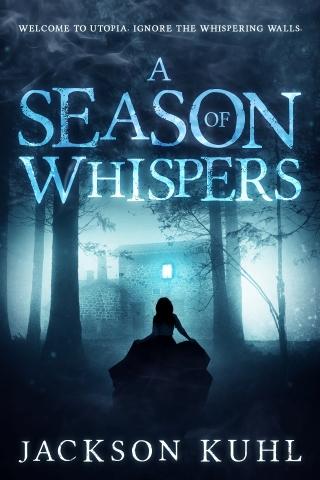
Introducing the finalized cover for my novel A Season of Whispers.

From the back cover:

In the summer of 1844, Tom Lyman flees to Bonaventure, a transcendentalist farming cooperative tucked away in eastern Connecticut, to hide from his past. There Lyman must adjust to a new life among idealists, under the fatherly eye of the group’s founder, David Grosvenor. When he isn’t ducking work or the questions of the eccentric residents, Lyman occupies himself by courting Grosvenor’s daughter Minerva.

But Bonaventure isn’t as utopian as it seems. One by one, Lyman’s secrets begin to catch up with him, and Bonaventure has a few secrets of its own. Why did the farm have an ominous reputation long before Grosvenor bought it? What caused the previous tenants to vanish? And who is playing the violin in the basement? Time is running out, and Lyman must discover the truth before he’s driven mad by the whispering through the walls.

Many, many thanks to Aurelia Leo publisher and editor-in-chief Zelda Knight for working so hard to put this incredible cover together. It went through several iterations, each one better than the last, and I couldn’t be happier with the finished product. When I suggested the original concept of “women with great hair fleeing Gothic houses,” she immediately grokked what I meant, right down to the singular lit window in the house.

A Season of Whispers will be available October 2020. You can preorder it at Aurelia Leo’s site.