Realgar

The John S. Cook and Company building in Rhyolite, Nevada CC BY Brian W. Schaller, 2004

Of all the stories in The Dead Ride Fast, “Realgar” is probably the closest to a horror story. I’ve always been intrigued by the concept of escheat — the legal provision in which land in the United States cannot be unowned. If no one else owns a parcel, then it reverts to the ownership of the government, which in turn can sell it to somebody else.

That means ultimately any site or building — like, say, a haunted ghost town — is owned by someone, whether it’s a person, company, or government entity. You can’t just walk away from evil.

For The Dead Ride Fast I’ve restored a couple of sentences that were cut when “Realgar” first appeared in the 2012 anthology Low Noon. I don’t think the cuts were intentional; rather I suspect they resulted from an assembly error while the editor was stitching together the book manuscript. They’re fairly minor lines but I’m glad I had the opportunity to knit them back in.

The town of Realgar, BTW, is based on the Nevada ghost town of Rhyolite. I’ve never been there. All of my weird Westerns are inspired by a backpacking tour I took of the southwest in the early 90s as well as a 10-week period when I lived on the outskirts of Houston. My memories of those times, so staticky and sepia-toned, factored largely in my desire to write these sorts of acid-Western stories — to create these landscapes that are neither literally true nor figuratively false.

Barbary

Barbary
Barbary by Ben Baldwin, 2012

Ah, “Barbary.” My favorite among The Dead Ride Fast.

An initial concept when I began writing my Strange Wests stories was a focus on water.

Western landscapes in both books and movies can be divvied into two categories, either mesa-choked desert or rolling plains. Forgotten is the importance of watercraft in the expansion of the western frontier. Think of the major American cities situated along Mark Twain’s Mississippi alone: Minneapolis, St. Louis, Memphis. One historian (I can’t remember who) called New Orleans the gateway between the Old South and the Wild West because much of eastern and southern Texas was settled by folks who arrived via ship from NOLA. In 1850, California, with its 840 miles of coastline, became our 31st state, sandwiching a wide swathe of unexplored land between it and the rest of the states. Some of its settlers crossed the continent directly but others went by sea, most of them arriving via San Francisco.

I wanted to set a sailing story in San Francisco, which for the second half of the 19th century was probably the US’s largest city west of the Mississippi (by 1880 it was the nation’s ninth most populous). It was very much a frontier city, so raucous and dangerous that its Vigilance Committees — organized in the face of horrible police and government corruption — gave us the word vigilante.

Married to this setting was my fascination with 19th-century mummy unrolling. I also wanted to experiment with an untrustworthy narrator who spoke in a rich, overwrought style not unlike that of Clark Ashton Smith or Jack Vance — a style I call my Pompous Purple. Writing in Pompous Purple can be tricky; it takes a special kind of editor to get the joke, and I have far more unsold Purple manuscripts sitting on my hard drive than I have in print. Fortunately, Andy Cox at Black Static loved “Barbary” and bought it immediately. After publication it received a fair amount of attention on review blogs.

I wrote other “wet Westerns” too, stories about privateers in the Gulf of Mexico (“Galveston”), riverboat gamblers (“Rio Grande”), New Orleans rising above the bayou (“Crescent City”). But “Barbary” is the best of them.

For what it’s worth, “Barbary” received an honorable mention in Ellen Datlow’s long list for 2013’s The Best Horror of the Year, Volume 5.

Double Bar

Faraway Ranch, Arizona, circa 1920s

When I was putting The Dead Ride Fast together, I noticed that for a book of ghost stories it oddly didn’t feature a single haunted-house story. There are haunted places a-plenty but nary a haunted house.

“Double Bar,” being the sole non-reprint in the collection, aims to remedy that. It’s an episodic short with various brief chapters told out of chronological order, plus some commentary on the nature of stories themselves and how we often construct narratives from random snippets we collect. Often we can never know the truth of a thing, we only cobble together an interpretation pieced from different sources.

Or something.

There’s also a couple of levels of storytelling within storytelling in “Double Bar,” which is always fun in a ghost story.

Quivira

Home of the Cliff Dwellers postcard
Home of the Cliff Dwellers, Mesa Verde, Colorado, 1898

“Quivira” was written in the fall of 2011 in that initial burst of fiction writing I had after Smedley was released. I spent much of that summer and autumn giving presentations and doing signings around Connecticut. During my off moments I still wanted to write but I didn’t have the time to focus on a new long-form project, which is why I had begun writing short fiction. It was a way to keep my knives sharp without the commitment.

Prior to “Quivira” I had been writing alternate histories and likewise it was intended to be an alt-hist until it somehow went sideways into a land of doppelgängers and American Indian mythology. Being so busy meant time was a recurring issue in my head; and, more specifically, how often there aren’t enough hours in a given day to get things done. To succeed at one ambition often means sacrificing another due to lack of time — it is the compromise of the clock.

What if those squashed ambitions returned to haunt you in a literal sense?

Eric Guignard accepted the story for his first anthology Dark Tales of Lost Civilizations, which went on to be nominated for a Stoker. Better still, we struck up a friendship and years later would work together on another project.

Mourning Dove

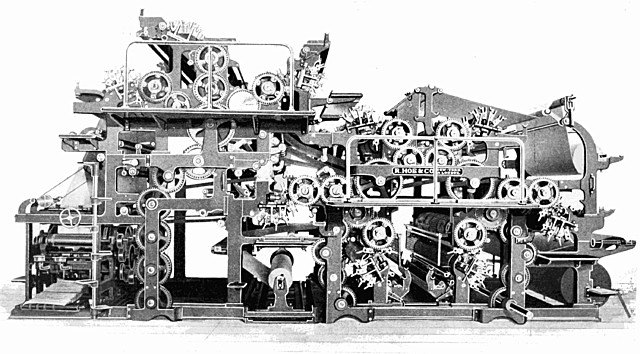
Printing pressWhen I was a kid my dad had a playback typewriter. As you typed a document the typewriter would perforate a tape of green paper. When you were done, you flipped a switch and fed the perforated tape back into the machine, whereupon it would automatically type a copy of the document — useful, I guess, in an era when copiers were reserved for big businesses and copy shops were far between. Of course, you had to type that initial document perfectly otherwise the tape would repeat a mistake in every copy, which to my mind restricted the machine’s utility to professional typists.

This strange artifact, so specific in time, sat large in my mind as I wrote “Mourning Dove,” which features a mechanical mashup of a printing press and a player piano. The story is a tight 3K, written late last year for Third Flatiron’s weird West anthology Principia Ponderosa.

A recurring thought at the time (you can maybe guess why) was whether knowing the hour and manner of your own death would be beneficial — you could live as if every day was literally among your last — or if the anticipation of death’s approach would be too anxiety inducing and therefore you would actively avoid knowing. Thing is, even in the absence of a prophetic machine we usually make one of these choices.

Story order is important to any collection, and I think as an opener for The Dead Ride Fast, the fast pace and relative brevity of “Mourning Dove” make for a solid tone setter.